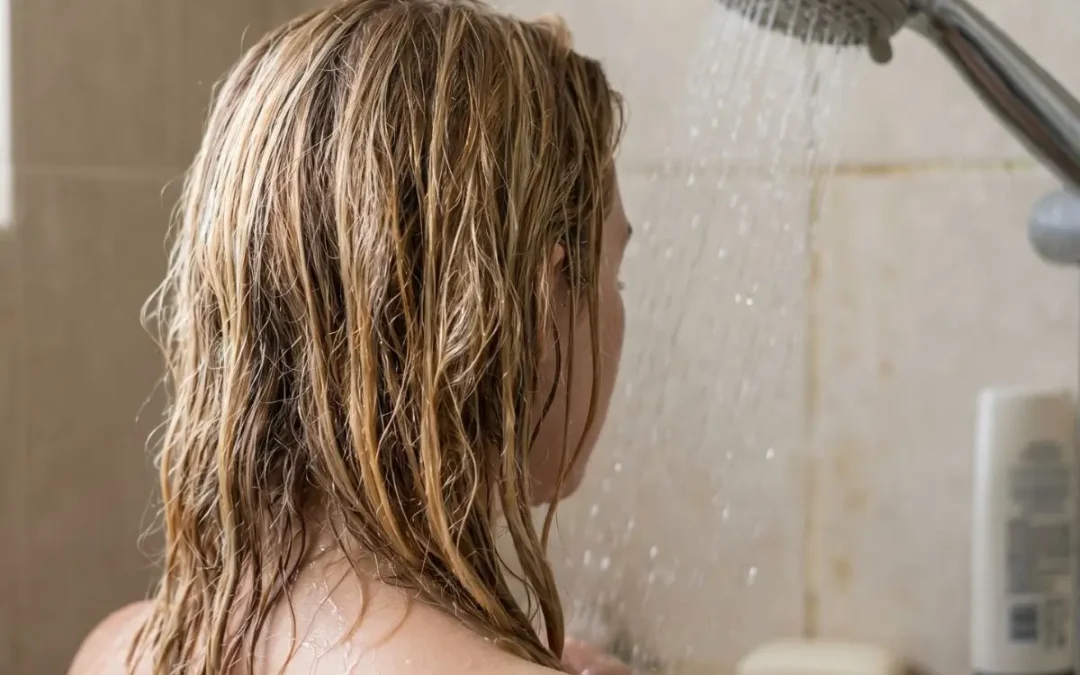
There is a conversation that happens at Kate’s Kuts more often than almost any other. A client comes in for a color refresh, frustrated that her blonde has gone brassy, her highlights look dull, or her balayage has lost its vibrancy — and she is convinced something went wrong at her last appointment. In most of these cases, nothing went wrong. The color was applied correctly. The problem is happening in her shower, every single day.
Southwest Florida has some of the hardest tap water in the United States, and most residents have no idea what it is doing to their hair.
Where Southwest Florida’s Water Comes From
Most of the water supply in Collier and Lee Counties is drawn from the Floridan Aquifer System — one of the largest and most productive aquifer systems in the world, stretching beneath much of Florida and into neighboring states. [1] The aquifer sits beneath thick layers of porous limestone, and as water moves through that rock over thousands of years, it dissolves and absorbs high concentrations of calcium, magnesium, and in some areas, iron.
By the time that water reaches your showerhead, it carries a significant mineral load. The University of Florida’s Institute of Food and Agricultural Sciences has documented that much of Southwest Florida’s groundwater exceeds 180 milligrams per liter of total dissolved solids — well above the threshold that water quality experts consider “hard.” [2]
When you wash your hair with this water, those minerals do not simply rinse away. They bond to the protein structure of the hair shaft and accumulate with every wash.
What Mineral Buildup Actually Does to Your Hair
The effects of hard water on hair are cumulative and compound over time. Understanding what is happening at the structural level explains why the damage can be so difficult to reverse without professional treatment.
Calcium deposits create a physical barrier. Calcium is the primary mineral in hard water, and it binds to the negatively charged proteins in your hair with remarkable tenacity. Over weeks of washing, a calcium film builds up on the outside of each strand. This film does several things simultaneously: it blocks moisture from penetrating the hair shaft (leaving hair chronically dry), it prevents color molecules from absorbing evenly during your next color service, and it creates a rough, scaly texture that makes hair look dull and feel coarse.
Magnesium amplifies frizz. Magnesium deposits interact with the hair cuticle in a way that keeps it slightly lifted rather than lying flat. A lifted cuticle is a frizzy cuticle — and in Florida’s humidity, this compounds the frizz problem significantly. For a full explanation of how humidity and porosity interact to cause frizz, see The Ultimate Guide to Beating Florida Frizz.
Iron causes color shifts. In areas where the water supply contains elevated iron — which is not uncommon in parts of Lee and Collier Counties — the effect on blonde and lightened hair can be dramatic. Iron oxidizes on the hair shaft and creates a yellow, orange, or even greenish cast that no amount of purple shampoo will fully correct. This is because purple shampoo is designed to neutralize brassiness caused by the hair’s underlying pigment, not by external mineral deposits.
The Symptoms: Does This Sound Familiar?
Hard water damage tends to follow a predictable pattern. If you recognize three or more of the following, mineral buildup is almost certainly a factor in your hair’s condition.
| Symptom | What It Indicates |
|---|---|
| Color fades within 2–3 weeks of appointment | Calcium film blocking color absorption |
| Blonde or highlights turning brassy or dull | Mineral oxidation on the hair shaft |
| Hair feels heavy or “coated” after washing | Mineral film accumulation |
| Conditioner doesn’t seem to absorb | Calcium barrier blocking moisture |
| Frizz is worse than usual despite treatments | Magnesium keeping cuticle lifted |
| Color looks uneven or patchy | Inconsistent mineral distribution blocking dye |
| Hair breaks more easily than expected | Mineral deposits making hair brittle |
What a Professional Mineral Detox Treatment Does
Over-the-counter clarifying shampoos can remove some surface buildup, but they are not formulated to break the ionic bond between calcium and the hair’s protein structure. A professional mineral detox treatment uses chelating agents — compounds specifically designed to bind to metal ions and lift them off the hair shaft — at a concentration and pH level that consumer products cannot match.
At Kate’s Kuts, a mineral detox treatment is typically performed as a pre-color step. Removing the mineral buildup before applying color allows the dye to penetrate the hair shaft evenly, resulting in more vibrant, longer-lasting color with significantly less brassiness. Clients who add a detox to their color service routinely report that their color looks noticeably different — brighter, more even, and more true to the swatch they chose — compared to previous appointments without the treatment.
The detox can also be performed as a standalone service between color appointments to maintain the hair’s health and prevent buildup from accumulating to the point where it affects your next color result.
What You Can Do Between Appointments
While a professional detox is the most effective solution, there are steps you can take at home to slow the rate of mineral accumulation.
A chelating shampoo used once every two to four weeks will remove a meaningful portion of surface mineral deposits. Look for products that list EDTA (ethylenediaminetetraacetic acid) or phytic acid in the ingredient list — these are the chelating agents that actually bind to minerals, as opposed to standard clarifying shampoos that simply strip oils and product buildup.
A shower filter designed to reduce calcium and magnesium is a worthwhile investment for clients who color their hair regularly. While no shower filter eliminates all mineral content, reducing the concentration of minerals in the water meaningfully slows the rate of buildup on the hair.
Finally, rinsing with the coolest water you can tolerate after conditioning helps keep the cuticle sealed, which reduces the surface area available for mineral deposits to bond to.
The Connection to Frizz Amplification
Hard water and humidity work together in a way that makes each problem worse. Mineral deposits keep the cuticle slightly rough and lifted. A lifted cuticle absorbs environmental moisture more aggressively. More moisture absorption means more frizz. This is why clients who address their hard water problem often notice an improvement in their frizz as well — the two issues share the same root cause: a compromised cuticle.
Book Your Mineral Detox Consultation
If your color has been fading faster than it should, or if your hair has been feeling heavy and dull despite regular conditioning, a mineral detox treatment is the most likely solution. Our stylists will assess your hair’s current condition and recommend whether a standalone detox or a pre-color detox is the right approach for your situation.
Book a consultation at Kate’s Kuts and let us restore your color to what it was always supposed to look like.
References
[1] U.S. Geological Survey. (n.d.). The Floridan Aquifer System. https://www.usgs.gov/mission-areas/water-resources/science/floridan-aquifer-system
[2] University of Florida Institute of Food and Agricultural Sciences. (n.d.). Water quality and common water problems in Florida. https://edis.ifas.ufl.edu/publication/SS435
[3] Central Florida Public Media. (2024). The battle between Central Florida’s hard water and your hair. https://www.cfpublic.org/2024-04-26/the-battle-between-central-floridas-hard-water-and-your-hair